Training That Starts Before the First Journey

They need to understand your vehicles, procedures, responsibilities and expectations.
The same applies to new members of your transport, compliance, workshop or operations teams.
TecHGV Training and Inductions gives you a structured way to introduce people to your fleet and ensure important training is completed from the start.
Instead of relying on informal conversations, paper checklists or spreadsheets, you can create a more consistent digital training process.

Make Driver Induction More Consistent
Every new driver should receive the same essential introduction to your operation.
A structured driver induction can help cover the information your organisation expects drivers to understand before they begin working independently.
Use your training process to introduce areas such as:
- Company procedures
- Fleet policies
- Vehicle checks
- Defect reporting
- Tachograph procedures
- Driver responsibilities
- Health and safety
- Compliance requirements
- Company-specific working practices
A consistent induction gives new drivers a clearer understanding of how your fleet operates and what is expected of them.

Put New Starters on the Right Training Path
Different people need different training.
A new HGV driver may need a different induction from a fleet administrator, transport manager or workshop employee.
TecHGV allows your training process to reflect those different responsibilities.
Build training around the role rather than giving everyone the same generic information.
This helps ensure that new starters receive training that is relevant to the work they will actually be doing.
Know Who Has Completed Their Training
Training only works when you know whether it has been completed.
TecHGV helps give fleet managers a clearer view of training progress, allowing you to identify completed training and outstanding requirements.
Instead of asking:
“Has everyone completed their induction?”
you can work from a clearer record of training activity.
That makes follow-up easier and reduces the risk of important training requirements being forgotten.
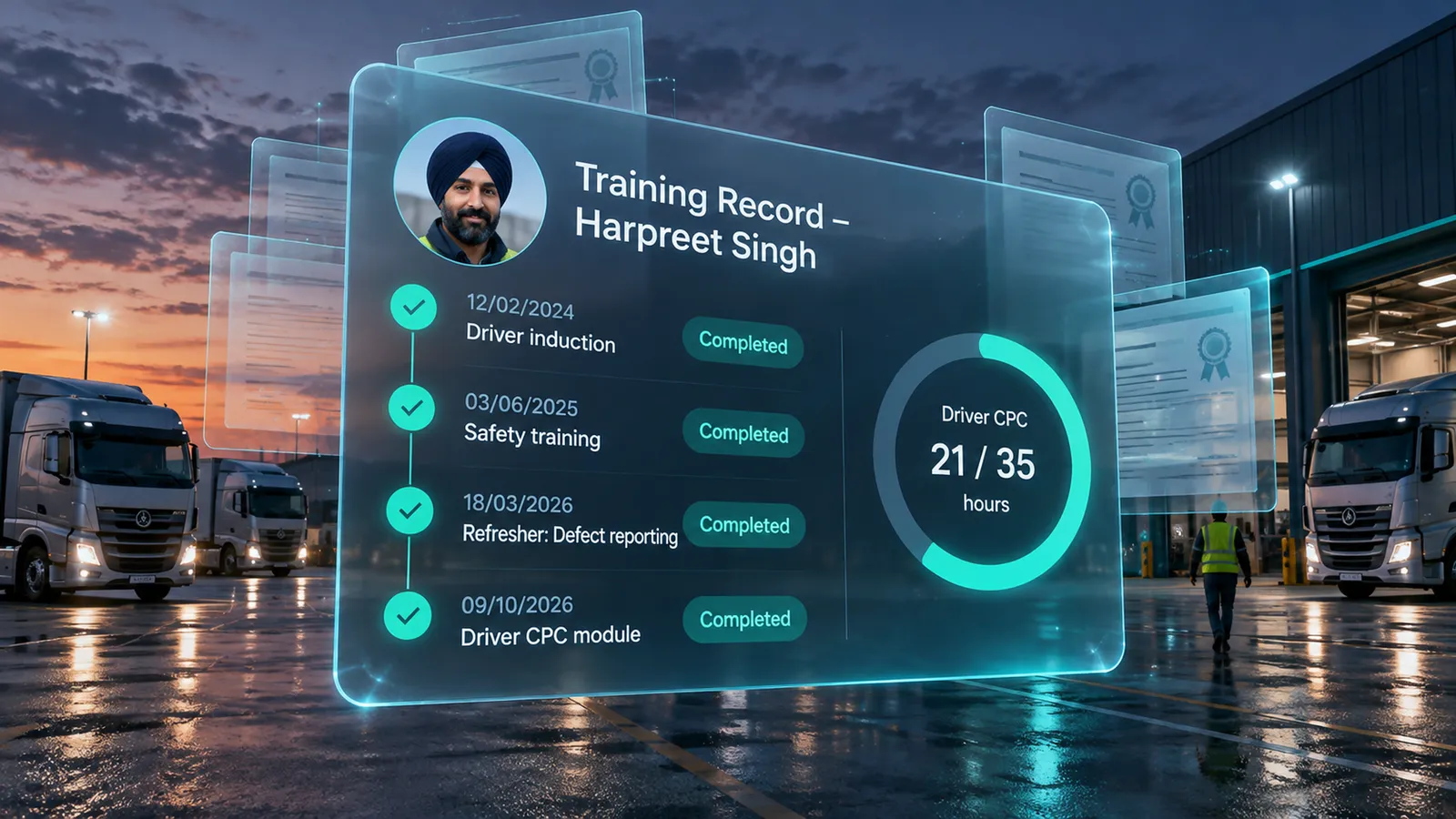
Keep Driver Training Records Organised
Driver training can generate a significant amount of information.
Courses completed. Inductions. Refresher training. Safety training. Internal procedures.
Keeping those records organised gives your team a more complete view of each driver’s training history.
A central digital record can make it easier to review what training has been completed and identify areas where further training may be required.
Train. Track. Follow Up.
A better training workflow should make every stage easier.
- 01
Assign
Identify the training a driver or employee needs.
- 02
Train
Provide the relevant information and learning material.
- 03
Record
Maintain a clear record of completed training.
- 04
Review
See where training is outstanding or where further development may be needed.
- 05
Refresh
Keep training relevant as procedures, responsibilities and fleet requirements change.
Build a Better Driver Onboarding Process
Driver onboarding should be more than paperwork.
It is an opportunity to establish good habits before a new driver becomes fully responsible for a vehicle and its daily operation.
Use your induction process to introduce drivers to the systems and procedures they will rely on throughout their role.
From vehicle checks and defect reporting to fleet policies and compliance procedures, a structured onboarding process can help new drivers understand how to work safely and consistently within your operation.
Support a Stronger Safety Culture
Training plays an important role in helping employees understand safe working practices.
For fleet operators, that can include everything from daily vehicle checks and defect reporting to driver responsibilities and company safety procedures.
By making training part of your everyday fleet management process, you can reinforce the behaviours and procedures that matter to your operation.
Training becomes more than a one-off induction.
It becomes part of your fleet’s ongoing safety culture.
Keep Refresher Training on the Radar
Training does not end after a driver’s first week.
Processes change. Responsibilities change. Vehicles change. Your fleet changes.
Drivers and employees may also benefit from refresher training when a particular process needs reinforcing.
A structured training management process makes it easier to maintain ongoing learning rather than treating induction as a one-time event.
Keep important training visible and give your team a clearer way to manage follow-up requirements.

Turn Training Into an Ongoing Fleet Process
Training is often treated as an HR responsibility.
In fleet operations, it is much more closely connected to everyday compliance, safety and performance.
Driver training can influence how people:
- Complete vehicle checks
- Report defects
- Manage tachograph responsibilities
- Follow company procedures
- Operate vehicles safely
- Respond to incidents
- Follow fleet policies
That makes training an important part of fleet management — not an isolated administrative task.
Give Fleet Managers Better Training Visibility
Managing training across a fleet can become difficult when records are held in separate spreadsheets or paper files.
TecHGV provides a more structured approach by bringing training information into your wider fleet management environment.
Fleet managers can have a clearer view of training requirements without relying entirely on individual records or manual follow-ups.
That means fewer unanswered questions and better visibility of your team’s training position.
Make Inductions Easier for New Drivers
Starting a new job can be overwhelming.
There is a lot to learn, particularly for drivers entering a busy commercial fleet environment.
A structured induction gives new starters a clear path through the information they need.
Rather than trying to remember everything from a single conversation, drivers can follow a defined training process that helps them understand their role and responsibilities.
That can help new employees become confident in your operation more quickly.
Standardise Training Across Your Fleet
Consistency matters when you have multiple drivers, vehicles, depots or teams.
Without a standardised process, different employees may receive different levels of training depending on who inducts them.
A central training management system helps your organisation establish a consistent approach.
Everyone can follow the same core induction process while additional training can be assigned according to role, responsibilities or individual requirements.
Training for Drivers, Fleet Teams and New Starters
Training and Inductions is not limited to drivers.
Different members of your organisation may need different forms of fleet training.
- 01
Drivers
Introduce drivers to your vehicles, procedures, safety requirements and fleet policies.
- 02
Fleet Managers
Support new managers with the processes, systems and information they need to manage the fleet effectively.
- 03
Transport Teams
Provide structured training around operational and compliance processes.
- 04
Workshop Teams
Help relevant employees understand inspection, defect and maintenance procedures.
- 05
New Employees
Give every new starter a consistent introduction to the processes relevant to their role.
Keep Training Connected to Your Fleet
Training is more useful when it sits alongside the operational information it relates to.
TecHGV connects Training and Inductions with your wider fleet management environment.
- 01
Vehicle Checks
Train drivers on your required daily walkaround and defect-reporting procedures.
- 02
Tachograph Compliance
Reinforce the importance of correct tachograph processes and driver responsibilities.
- 03
Driver Tracker
Connect driver activity and performance management with the wider driver development process.
- 04
Vehicle Management
Help new drivers understand the vehicles they operate and the procedures surrounding them.
- 05
Fleet Compliance
Keep training aligned with your wider compliance processes. The result is a more connected approach to managing your people and your fleet.
Reduce Training Administration
Training management can quickly become another spreadsheet for the fleet office.
Who has completed their induction?
Who still needs training?
When was a driver last trained?
Which new starter has not completed the required process?
A structured digital training system can reduce the administrative effort involved in answering those questions.
Instead of maintaining separate lists, your team has a central place to manage training information.
Create a Clearer Training History
A good training record should show more than a tick in a spreadsheet.
It should help your team understand a person’s training journey.
Maintain a clearer history of completed inductions and training activities so you can review what has been covered and identify where further training may be useful.
This creates greater visibility for fleet managers and helps make training a measurable part of your fleet operation.
From New Starter to Fully Trained Driver
A successful induction should create a clear journey.

- 01
Welcome
Introduce the new employee to your organisation and fleet.
- 02
Induct
Cover the essential procedures and responsibilities for their role.
- 03
Train
Provide the training they need to work safely and effectively.
- 04
Track
Maintain visibility of their training progress.
- 05
Review
Identify outstanding requirements or areas that need reinforcement.
- 06
Develop
Continue supporting learning as their role and your fleet evolve.
Why Choose TecHGV Training and Inductions?
- 01
Centralise training
Manage driver and employee training from one fleet management platform.
- 02
Standardise onboarding
Give new starters a consistent induction process.
- 03
Track completion
Maintain clearer visibility of completed and outstanding training.
- 04
Support driver safety
Make training part of your wider fleet safety and compliance processes.
- 05
Reduce administration
Move away from disconnected spreadsheets and paper training records.
- 06
Keep training ongoing
Support refresher training and continued learning beyond the initial induction.
- 07
Connect training with fleet operations
Keep driver development alongside the vehicle, compliance and operational information your team already manages.
Make Every Induction Count
Your drivers and fleet team are one of your most important fleet assets.
Give them the right start with a structured training and induction process that is easier to manage, track and maintain.
With TecHGV, training becomes part of your wider fleet management workflow — from the first day of a new starter to ongoing driver development.
Train consistently. Track progress. Build a stronger fleet.
Build a Better-Trained Fleet With TecHGV
Give every new starter a clearer beginning and every driver a better path for ongoing development.
Use TecHGV Training and Inductions to organise training, improve onboarding and keep a clearer record of your team’s progress.